Updated: July 2026
Bandaneira Luxury — The Ultimate Guide to the History of the B…
Bandaneira Luxury is a curated Indonesia luxury tourism experience offered by Bandaneiraluxury Guide: handpicked routes, vetted operators, transparent pricing, and 24/7 concierge support across Indonesia.
- What makes Bandaneira Luxury a premium experience.
- How Bandaneiraluxury Guide curates exclusive access and concierge logistics.
- Routes, seasons, and pricing transparency — no hidden fees.
The Ultimate Guide to the History of the Banda Spice Islands
The Banda Islands are a living chronicle of global trade, a tiny archipelago of just 10 islands located 200 kilometers from Ambon that were once the most coveted specks of land on Earth. The scent of nutmeg and mace still hangs in the air, a fragrant reminder of a history that shaped empires for over 400 years. A journey here is more than a holiday; it is an immersion into a story etched in stone, sea, and spice, offering a form of Banda Neira luxury defined by unparalleled historical depth. Indonesia travel guide
The Original Spice Islands: A Global Epicentre of Nutmeg and Mace
The Banda Islands’ spices were once among the most valuable commodities in the world; in 14th-century Europe, just half a kilogram of nutmeg could purchase three sheep or a cow. Long before European sails appeared, this archipelago of just 172 square kilometers held a unique position as the world’s only source of nutmeg and mace. Coveted as culinary spices, preservatives, and medicines, they were carried by Arab, Indian, and Chinese traders along ancient routes, eventually reaching the halls of European nobility.
This pre-colonial era was one of prosperity for the islands’ roughly 15,000 inhabitants, governed by chieftains, or *orang kaya*, who skillfully managed their agricultural wealth. The islands were a cosmopolitan hub where Bandanese traders exchanged their spices for goods like Indian textiles and Chinese porcelain, often at less than 1/300th of the product’s final price in Europe. The Bandanese were master seafarers, controlling the cultivation and initial sale of their fragrant treasure, unaware of the violent storm gathering in the West.
The Arrival of the Europeans and the VOC Monopoly
The 16th century marked a dramatic turning point. Lured by tales of unimaginable wealth, the Portuguese under António de Abreu were the first Europeans to arrive in 1512, followed by the English and, most fatefully, the Dutch. It was the Dutch East India Company (VOC), founded in 1602 and considered the world’s first multinational corporation, that would forever alter the destiny of the Banda Islands. With ruthless single-mindedness, the VOC sought not just to trade, but to control a complete and total nutmeg monopoly.
To enforce their will, the Dutch began a campaign of fortification. In 1609, on the main island of Neira, they constructed their first major stronghold, Fort Nassau, on the foundations of an earlier Portuguese trading post. This imposing structure, initially garrisoned with 400 soldiers, became the administrative and military heart of the VOC’s regional operations. Its construction marked the beginning of the end for Bandanese independence, signalling a new era where trade would be dictated not by negotiation, but by cannon and musket.
The Perkenier Massacre: A Dark Chapter in Banda’s History
The Bandanese people fiercely resisted Dutch attempts to enforce exclusive trade contracts, culminating in one of colonial history’s most brutal episodes. In 1621, the VOC’s Governor-General, Jan Pieterszoon Coen, arrived with a fleet of 13 ships and nearly 2,000 soldiers. His objective was to eliminate all opposition. After luring 44 of the islands’ leaders, or *orang kaya*, to a supposed negotiation, he had them publicly executed. This act was the prelude to a systematic and violent depopulation of the islands.
An estimated 14,000 of the 15,000 Bandanese inhabitants were killed, enslaved, or forced to flee, leaving only about 1,000 survivors. With the indigenous population decimated, Coen implemented the *perkenier* system. The islands were divided into 68 plantation plots, or *perken*, which were granted to Dutch colonists (*perkeniers*). These new masters operated the lucrative nutmeg groves using slave labour imported from other parts of the archipelago. This dark chapter established the Dutch monopoly and created a new colonial society built upon the ashes of the old.
Forts and Fortifications: The Architecture of Control
The physical legacy of the VOC is most powerfully expressed in the formidable forts that still dominate the landscape. Towering above the harbour on Banda Neira is the magnificent Fort Belgica. Rebuilt into its current pentagonal form in 1672, this star fort is a masterpiece of military engineering with five imposing bastions designed for defence. Walking its restored ramparts offers striking views of the bay, the 667-meter cone of the Gunung Api volcano, and the neighbouring island of Banda Besar. It stands as a silent, stone testament to the power and paranoia of the Dutch empire.
Below it lies the older Fort Nassau, the original seat of Dutch power. Exploring these sites is a cornerstone of any true Banda Neira luxury heritage experience. Our curated journeys, guided by local historians vetted through our rigorous editorial process, allow you to connect with the tangible history of this colonial architecture. You can feel the weight of centuries underfoot, imagining the lives of the soldiers who manned these walls and the complex spice trade routes they were built to control.
Echoes of Independence: Sutan Sjahrir’s Exile
The islands’ history took another turn in the 20th century, becoming a place of banishment for key figures in Indonesia’s burgeoning independence movement. From 1936 to 1942, two of the nation’s future founding fathers, Sutan Sjahrir and Mohammad Hatta, were held in political exile on Banda Neira. Far from being broken by their isolation, they turned their simple homes into intellectual hubs, reading voraciously, writing influential essays, and educating the local children.
Today, the modest homes of Sutan Sjahrir and Mohammad Hatta are preserved as poignant museums. Visiting them provides a powerful counter-narrative to the colonial story. It is a reminder that the Banda Islands were not just a site of colonial exploitation, but also a crucible where the ideas of a free Indonesia were forged. These sites add a vital layer of modern political history to the archipelago’s mix, showcasing a legacy of intellectual resistance and the enduring spirit of independence.
Banda Neira Today: A Living Museum
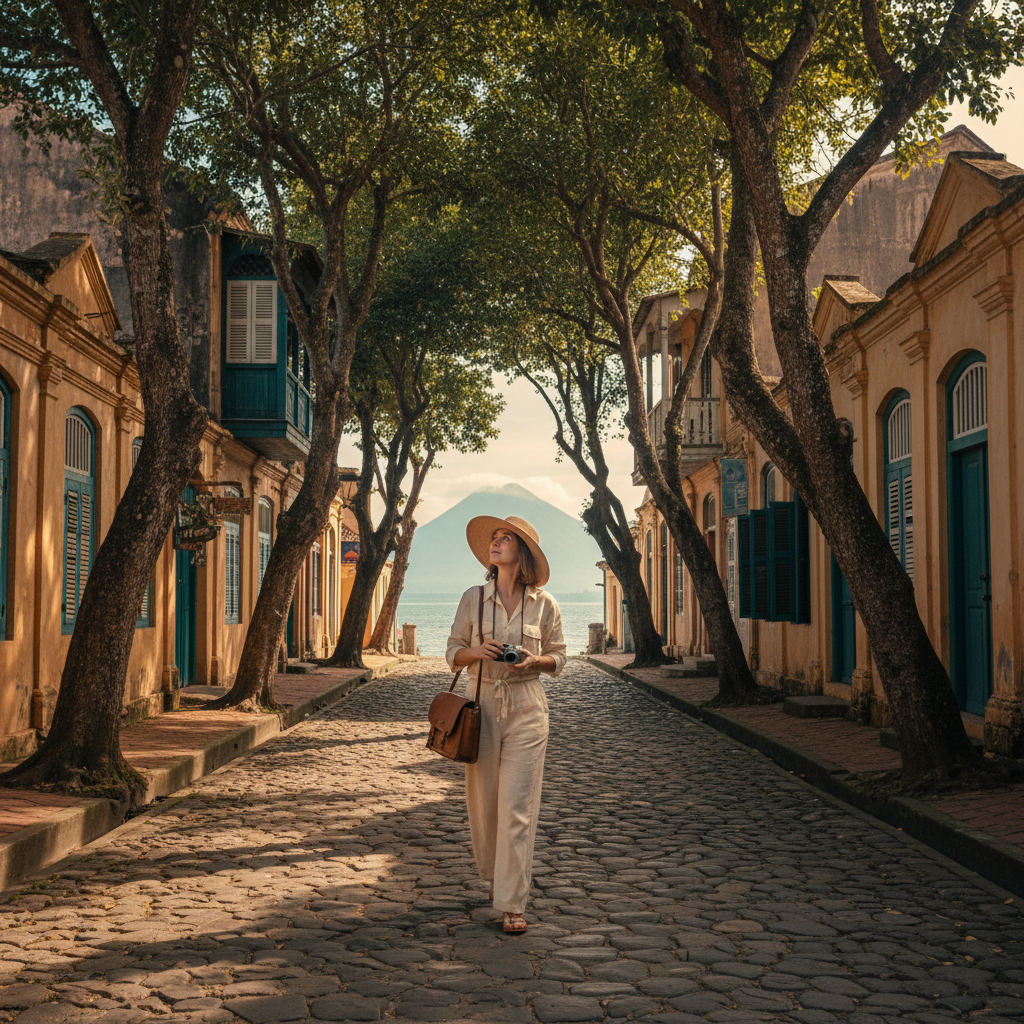
To visit the Banda Islands today is to step into a living museum. History is not confined to dusty relics; it is present in the elegant, if faded, colonial architecture of the mansions lining the shore of Banda Neira, in the centuries-old nutmeg plantations still shaded by giant kenari trees, and in the vibrant, syncretic culture of the Bandanese people. The descendants of the *perkeniers*, slaves, and traders from across the archipelago have forged a unique identity.
A thoughtfully designed Banda Neira luxury itinerary goes beyond the surface, connecting you with this living heritage. It involves walking through the spice gardens with a local planter, understanding the delicate process of harvesting nutmeg and mace, and listening to stories passed down through generations. It is in these authentic, unscripted moments that the complex, tragic, and beautiful history of the Spice Islands truly comes to life, offering an experience of profound and lasting resonance.
Begin Your Historical Journey
The history of the Banda Islands is a story that deserves to be experienced firsthand. Our team specialises in crafting bespoke journeys that illuminate the rich heritage of this remarkable archipelago. To begin planning your exploration of the Spice Islands, please contact our specialists at bd@juaraholding.com or via WhatsApp at +62 811-3941-4563 for a private consultation.
Frequently Asked Questions About Banda’s History
What made the Banda Islands so important historically?
The Banda Islands were historically crucial as they were the world’s only source of nutmeg and mace for centuries. These spices were immensely valuable in Europe for flavouring, preservation, and medicine, making control of the islands a primary goal for colonial powers. This monopoly on a high-demand commodity placed the tiny archipelago at the very centre of global trade and conflict, particularly during the 16th and 17th centuries, shaping the fortunes of nations and corporations like the Dutch East India Company (VOC).
Who were the VOC and what was their role in Banda?
The Vereenigde Oostindische Compagnie (VOC), or Dutch East India Company, was a powerful 17th-century trading corporation. In the Banda Islands, their role was to establish and enforce a brutal monopoly over the nutmeg trade. They achieved this by constructing formidable VOC forts like Fort Nassau and Fort Belgica, driving out European rivals, and ultimately subjugating and displacing the local Bandanese population through extreme violence, most notably the Perkenier massacre of 1621. Their actions transformed the islands into a tightly controlled plantation economy.
What is the significance of Fort Belgica?
Fort Belgica is a 17th-century pentagonal fortress built by the VOC on a hill overlooking the town and harbour of Banda Neira. Its strategic importance was immense, serving as the ultimate symbol of Dutch military dominance and control over the nutmeg monopoly. Its advanced star fort design provided a commanding view to defend against both maritime attacks and local uprisings. Today, it is the most iconic piece of colonial architecture in the islands and a UNESCO World Heritage tentative site, offering visitors panoramic views and a tangible connection to the past.
What was the Perkenier Massacre?
The Perkenier Massacre was a horrific event in 1621 led by VOC Governor-General Jan Pieterszoon Coen. To crush Bandanese resistance and secure a total nutmeg monopoly, Coen’s forces systematically killed, enslaved, or drove away nearly the entire indigenous population of the islands, estimated at around 15,000 people. The depopulated land was then divided into plantations (*perken*) and given to Dutch colonists (*perkeniers*) who used slave labour to cultivate nutmeg, fundamentally and violently reshaping the islands’ society and economy.
Why was Sutan Sjahrir exiled in Banda Neira?
Sutan Sjahrir, along with Mohammad Hatta, was a key figure in Indonesia’s independence movement. The Dutch colonial government considered them political threats and exiled them to the remote Banda Islands from 1936 to 1942 to isolate them from their supporters and suppress their nationalist activities. Despite the isolation, Sjahrir continued his intellectual work, writing and educating local children, making his exile home a symbol of intellectual resistance and the enduring fight for Indonesian sovereignty.
Can you still see the old spice trade routes today?
While the original spice trade routes are not visible physical paths, their legacy is everywhere in the Banda Islands. You can experience it by visiting the historic harbours where ships once loaded their precious cargo, exploring the VOC forts built to control the trade, and walking through the ancient nutmeg plantations. The routes themselves are now part of history, but their impact on the culture, architecture, and global significance of the islands is palpable and can be explored through guided historical tours.
What is colonial architecture like in Banda Neira?
The colonial architecture in Banda Neira is a fascinating blend of European design adapted to a tropical climate. You will find grand, white-washed mansions with large verandas, high ceilings, and tall shuttered windows, built by Dutch *perkeniers* (plantation owners). Key examples include the Governor’s Palace and other stately homes lining the waterfront. This is complemented by the formidable military architecture of Fort Belgica and Fort Nassau, creating a townscape that feels remarkably frozen in time and tells a story of wealth, power, and colonial life.
How did the Dutch nutmeg monopoly end?
The Dutch nutmeg monopoly, while fiercely protected for nearly two centuries, ended due to a combination of factors. The primary blow came in 1770 when a French horticulturist named Pierre Poivre successfully smuggled nutmeg seedlings out of the islands and cultivated them in Mauritius. Shortly after, the British temporarily seized the islands during the Napoleonic Wars and transplanted seedlings to their own colonies like Grenada and Zanzibar. This proliferation of the nutmeg tree in other parts of the world permanently broke the Dutch monopoly.
Is Fort Nassau accessible to visitors?
Yes, Fort Nassau is accessible to visitors. Located at the heart of Banda Neira town, it is older than the more famous Fort Belgica. While it is less restored than its counterpart on the hill, exploring its sturdy walls, gateways, and ruined structures offers a profound sense of the origins of Dutch power in the archipelago. A visit provides a different, more grounded perspective on the colonial military presence and serves as a crucial part of understanding the full historical narrative of the islands.
What is the cultural legacy of the spice trade in Banda today?
The cultural legacy is a rich and complex tapestry. It is seen in the local cuisine, which artfully uses nutmeg and other spices. It is present in the population itself, a unique mix of descendants from the few surviving Bandanese, European colonists, and the diverse Asian and Indonesian peoples brought in as slave labour. This history has created a syncretic culture with unique traditions, music, and a collective memory that is deeply intertwined with the story of spice.
Are the old nutmeg plantations still active?
Yes, many of the old nutmeg plantations are still active and function much as they have for centuries. Walking through these shaded groves, often under the canopy of massive, ancient Kenari trees planted to protect the delicate nutmeg trees, is a core Bandanese experience. Visitors can see the fruit on the trees, learn about the harvesting process of both nutmeg (the seed) and mace (the red aril), and smell the fragrant spices drying in the sun, connecting directly to the islands’ agricultural heritage.
How does a luxury tour enhance the historical experience?
A Banda Neira luxury tour enhances the historical experience by providing exclusive access and expert context. Instead of just seeing the sites, you are guided by local historians who can share nuanced stories and oral histories not found in guidebooks. It involves private viewings, comfortable and stylish heritage accommodations, and curated culinary experiences that connect you to the spice trade. This approach transforms a simple visit into a deep, comfortable, and intellectually stimulating immersion into the soul of the Spice Islands.
Related reading


